Wednesday, April 30, 2014

Switching to Reusables

Zero waste has helped raise my awareness of the various environmental implications that arise when I purchase a new item. This includes the resources used to make the item, the waste produced in the manufacturing and packaging, as wells as the conditions present for the workers. Every time I buy something new, I send a message to the manufacturer that screams ‘Make more!’ I now think of my dollars as votes, and every time I cast one, I'm trying to be sure that I'm voting for something produced in a sustainable manner. I don't always succeed in this endeavor, but I'm trying.

With this awareness in mind, I realized early in my journey that there were certain things I needed to buy in order to replace disposables with reusables. I tried finding them second hand, which avoids all the waste from buying new, but the things I needed weren't available that way:

Mesh bags for produce, cotton bags for dry bulk, and a bread bag- 

Purchased through Amazon. These bags live in my car in one of my grocery totes. I also keep certain produce stored in the mesh and cotton bags in the refrigerator. The bakery has no problem putting a fresh loaf of bread into my bag, although getting it sliced too has been tricky. The bread stays very fresh in the bag for a few days on the counter, then I slice what's leftover for storage in the freezer in the same bag.

reusables
The green beans and mushrooms will store in the produce
drawer in the bags, the lemons and avocados stay loose on
the counter until ripe, the nuts and pretzels go into glass
jars with air tight lids, bread goes in the freezer.
Purchased through Amazon. These are advertised as a replacement for paper towels, but they replaced my sponge for wiping off tables, counters, and dishes.
reusables
These are over a year old and
still going strong. They go in
the washing machine for cleaning.

Misto-

Purchased in store at Bed, Bath, and Beyond with minimal packaging. It replaced Pam. I debated for a long time before buying this, thinking I could get by without it, but there were too many times that a spray of oil was just what I needed. I wish I hadn’t waited for so long, it’s a great product. 
reusables


Sil-pat baking sheet-

Purchased in store at Bed, Bath, and Beyond with minimal packaging. Replaced tin foil and parchment paper for non-stick baking.
reusables


Re-chargeable batteries-


Purchased through Amazon. Our previous experience with re-chargeables from about 7 years ago wasn’t good, so we had gotten back in the habit of buying regular batteries. I read a lot of reviews about the current battery options and decided to go with Eneloop rechargeables. Our experience this time around has been very good.

Along with the new purchases, I also took a few things away without directly replacing them:

Ziploc bags, tin foil, cling wrap, wax paper-

I was sure I would need some of these things from time to time, so I put them in a box and placed them on a shelf in my laundry room. I haven’t looked in that box since early 2013. (I will give more details about how I get by without these things in a later post, but I basically ran to Google anytime I encountered a situation where I would normally use a disposable item and asked how to do it waste-free.)

I made other additions and subtractions, but many people have asked me to go slowly with the changes. I’m doing my best to remember the order in which I did everything, however, motherhood hasn't been kind to my memory. I'm at the point where I need a daily alarm on my phone to remind me to feed the dog in the morning. Even with that, he frequently doesn’t get fed until noon.

Thanks for stopping by,
Allison


Having trouble commenting below? Contact me at zwjourney@gmail.com.


Wednesday, April 23, 2014

Getting Started

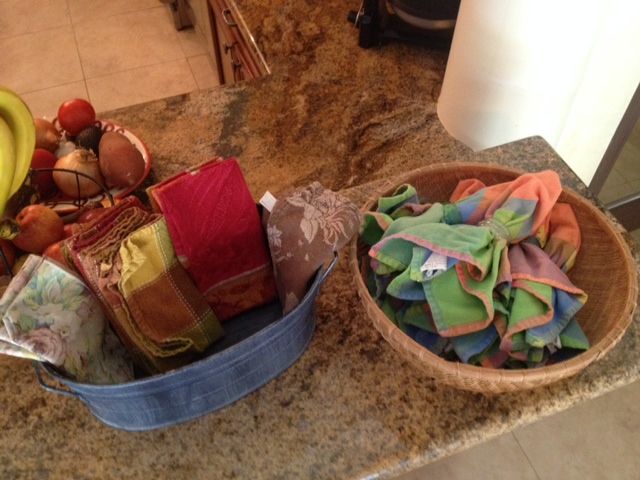
When I first began my zero waste journey, there were a few things I realized I could quickly do that didn't require doing a whole lot. One was to start using cloth napkins instead of disposable ones. I already had 10 nice cloth napkins sitting in my linen closet from when I got married 15 years ago. They match one of my sets of dishes, have cute little napkin rings, and I have always loved pulling them out once a year for a
family holiday dinner. They now sit in a woven basket near our dining table. I quickly realized the versatility of cloth napkins and slowly picked up more whenever I was near Goodwill, which always has many sets to choose from. It does mean I have a mix of patterns, but I'm okay with that.
started


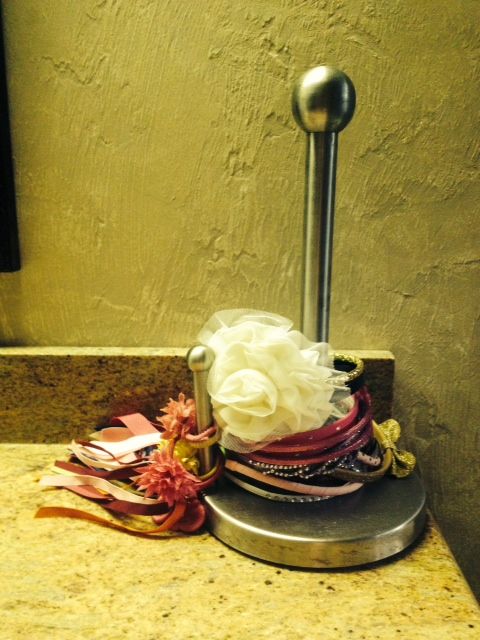
Along with ditching paper napkins, I decided to see how things would go without paper towels. I took them off the counter and was amazed to see how little we missed them. For any type of large spill, we now grab an old towel. The only other time I was using paper towels was to dry produce after washing it, or for wrapping lettuce to store in the fridge. I now use cloth napkins in both cases without a problem. The disappearance of the paper towels led me to my first re-purposing idea with the paper towel holder.
started
Placing my daughter's headbands and ponytail holders visibly on the counter
instead of stuffed in a drawer makes them much more likely to be used.

As for toilet paper, I've always bought a brand that is 100% recycled and non-bleached, but I switched to one that is also individually wrapped in paper, avoiding the disposable plastic wrapper from the bundles. Seventh Generation makes such a product, which is available at Earth Origins and the Gainesville Citizens Co-op, but CVS sells their brand, Earth Essentials, for a bit cheaper, so that's the winner for me. The paper wrapper can be recycled or composted, as can the paper tube roll. Empty tp rolls can also be re-used for many art activities, as well as for starting seedlings to transplant into the garden.


The last paper product I re-considered were tissues. The zero waste thing to do is to replace them with a handkerchief, but my other family members are not willing to go that route at this time. Luckily, we don't have a need for tissues very often, so for now my plan is to use up what we have, and then re-evaluate our options again before buying more.

So that's it for disposable paper products. It might not sound like much, but it's a very good start. Although I was previously buying disposable napkins and paper towels made from recycled materials and then composting them, it now makes so much more sense to simply not buy them. Not only have I saved money by no longer purchasing these items, it has saved me time at the grocery store too. For those who might argue that I now spend more time and resources on cleaning re-usable napkins and towels, I haven't found that to be the case. My family definitely uses cloth napkins far less frequently than we used disposable ones, and I don't wash them after every use, unless someone is sick. Our towel usage hasn't gone up either. I've always averaged about 1 load of towels every 2 weeks, which is what I average now. I will admit that there have been a few times when a disposable towel made more sense than a re-usable one, but those occasions have only come up two times during the last year.  One was when we needed to wipe up some oil. The other was when someone broke a drinking glass with liquid inside. In both cases, I used a few paper towels from the last roll I bought...a year and a half ago. Please let me know if you have any ideas on how to clean up messes like these in a way that doesn't create landfill waste.


Thanks for stopping by,


Allison

Tuesday, April 22, 2014

Here I Go....


I have been hesitant to start a blog. I don't like sitting at the computer, as I find it to be a black hole for time. Nobody else experiences this phenomenon, I know. Here is my main reason for finally taking the plunge- I have discovered that attempting to go zero waste is difficult in our current culture, and I am thinking that sharing my triumphs and failures with others could be beneficial for both parties. It is my hope that this will be a place where I can offer and receive information about achieving zero waste.


This is my story.


I have always been 'environmentally conscious', recycling all that I can, composting, and carrying around plenty of eco-guilt over things like disposable diapers. I have also been unsuccessfully battling a personal war on crap, as my family of 4 brings stuff in the door at an alarming rate. I realized a while ago that I am the one and only keeper of the crap in our house. If I don't constantly weed through, organize, and shovel crap back out the door, we will be buried in it within a week's time. I have certainly been sick of this job for a while, especially since I have felt helpless to change it. I have mostly been a nagging, annoying voice in the ears of my other family members, telling them that we do not need any more stuff. Surprisingly, this has done little to accomplish any real changes.


About a year and a half ago, I stumbled upon the blog, Zero Waste Home. The author is truly incredible with what she has accomplished and I constantly use her as an inspiration, as well as my main resource for going zero waste. When I first read about zero waste, I immediately became overwhelmed with all of the changes I wanted to make. I had a few days of feeling anxious and stressed, as I began noticing the potentially avoidable waste our family was producing. There was part of me that felt like there was no way I could turn the tide, that there was no way my family would understand how I was feeling and accept some of the changes that going zero waste would require from each of them. I wish I could say that I handled it beautifully by having a calm, rational family discussion that ended with all of us cheerfully running out into the yard to pee and wiping ourselves with fallen leaves. The reality was that I freaked out for a day or two, which freaked out everyone else, and  THEN I began making slow, steady changes towards reducing our waste. 


I have learned that zero waste is not about recycling more. It's about reducing the need to get rid of any type of waste- landfill, recyclables, and even compost. This begins outside the home by not purchasing or accepting items destined for disposal. The first rule of zero waste is refuse (followed by reduce, reuse, recycle).  

I am by no means a zero waste expert. I still don't understand everything about it, but I know I have made significant strides in reducing our family's waste. Over the last year and a half, we've gone from one full 20 gallon bag of landfill waste a week, to less than a gallon. Our recycle bins have also gone from full/overflowing to about 1/4 full each week. Just as important to me, I have noticed a significant improvement in our family's overall health and happiness. I am still trying to locate zero waste alternatives to certain things, but overall, it is rare that I have been unable to find or create a zero waste option to a previously disposal item or habit. I live in Gainesville, Fl, so I will be sharing a lot about the different businesses in my area that offer zero waste options for groceries and other products. I have been pleasantly surprised to find that my town is extremely supportive of waste reduction efforts.

One final word...I am a stay-at-home mom, who has the time and inclination to focus my energy on trying to achieve zero waste in my family. I recognize that this isn't the same for everyone. I'm hoping, however, that the more information I can make available, the easier it will be for others. If trying for zero waste seems impossible, please consider taking even the tiniest of steps towards this goal. It can make a huge difference. For me, I'm finding that working towards zero waste is simply about making small changes in old habits. Each time I make a shift, I realize how silly it was that I never thought more about what I was previously doing. While I'm eager to share all that I've learned as quickly as possible, I will be starting slowly, trying to give a week by week break down of the steps I've taken so far. This feels more manageable to me, and hopefully it will for you too, if you choose to join me in this journey. 

Thanks for stopping by,
Allison